


What Was Brought to Kolomenskoye Slope from Elsewhere in Moscow
Kolomenskoye estate transformed into an open-air architectural museum during the Soviet period when authorities relocated threatened historic structures from demolition sites across Moscow and beyond. The slope and surrounding grounds now display wooden churches, fortress towers, royal gateways, and even Peter the Great's childhood home — all moved beam by beam to this southern Moscow refuge.
Walking through these relocated structures feels like stepping through a portal into pre-revolutionary Russia. Each building carries stories of its original location and the sometimes-dramatic rescue that brought it here.
Peter the Great's Cabin from Arkhangelsk
The most famous relocated structure sits near the main palace complex: a modest wooden cabin where Peter I lived in 1702 while overseeing shipbuilding in Arkhangelsk. Soviet authorities transported this pine-log dwelling 1,200 kilometers south to Kolomenskoye in 1934.
The cabin measures just 60 square meters across three rooms. When I visited on a February morning in 2023, the guide pointed out axe marks still visible on the hand-hewn logs — Peter reportedly helped build sections himself. The low doorframes forced the two-meter-tall tsar to duck constantly, which the guide said he preferred because it reminded him to stay humble.
Original furnishings didn't survive the journey, but period replicas show the spartan lifestyle Peter chose during his northern campaigns. A small iron stove, a rope bed, and a writing desk fill the main room. The cabin opens May through September, Tuesday to Sunday 10:00-18:00. Entry costs 250₽ for adults.
Which Historic Gates Stand at Kolomenskoye?
Four monumental gates from demolished Moscow fortifications now guard different sections of the estate. Each represents a distinct architectural period and defensive philosophy.
The Nikolsky Gate arrived from the Nikolo-Korelsky Monastery near Arkhangelsk in 1932. This 17th-century structure features traditional Russian kokoshnik gables and was part of a monastery complex that faced demolition during anti-religious campaigns. Its thick walls still show slots where wooden defensive beams once slid into place.
The Bratsk Tower came from a Siberian fort on the Angara River in 1959. This watchtower represents the earliest type of Russian wooden fortification used during Siberia's colonization in the 1650s. The structure stands 15 meters tall with rifle ports at three levels. I climbed the internal ladder during my October visit and counted 43 narrow slits designed for musket fire — each angled to cover blind spots in adjacent towers' fields of fire.
Two gates from the Sumy Regiment fortress in Ukraine joined the collection in the 1970s. These squat, heavily timbered structures show how military architecture adapted to steppe warfare where cavalry attacks replaced siege tactics.
The Wooden Churches Rescued from Flooding
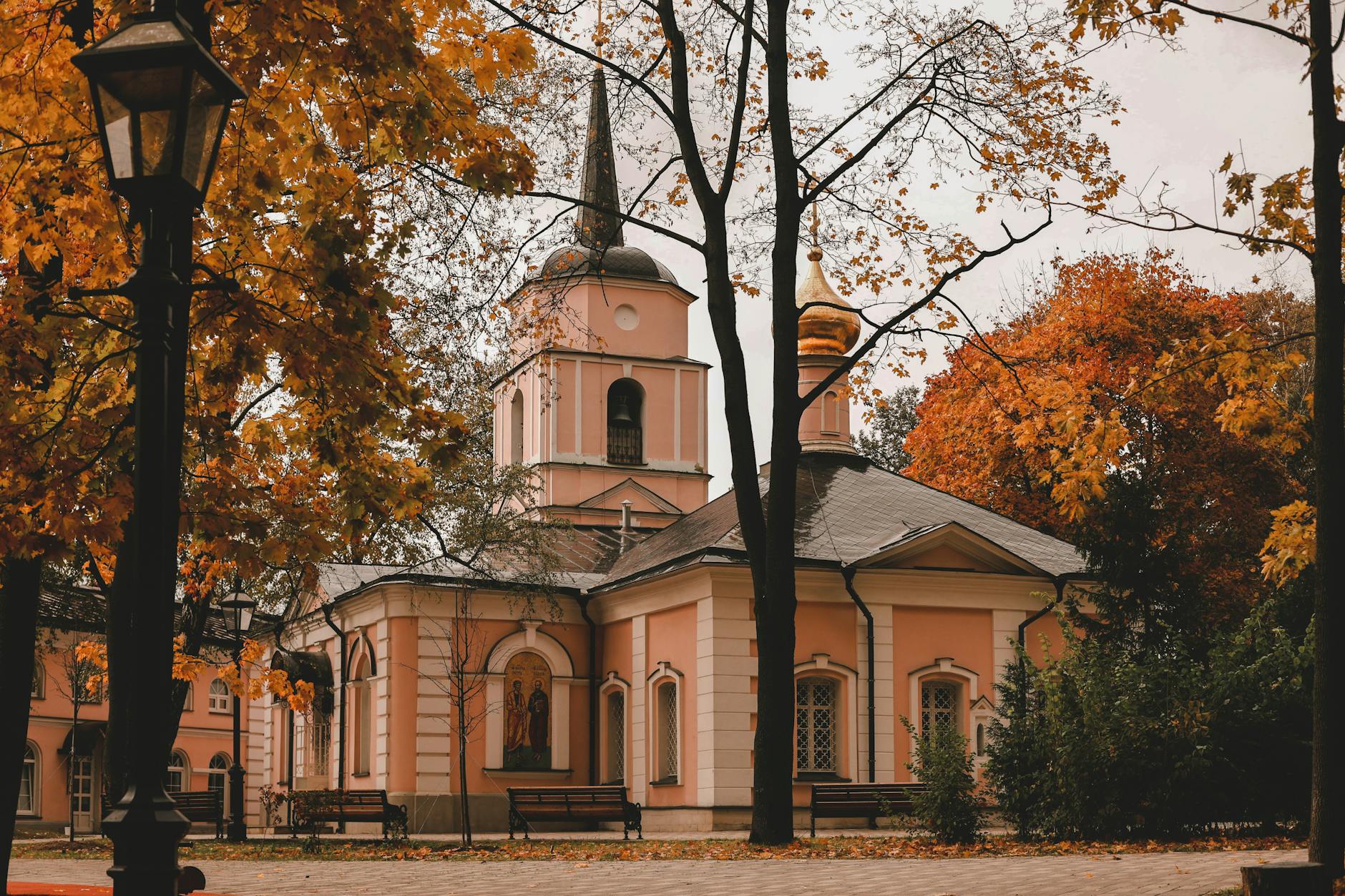
Three wooden Orthodox churches dominate the museum's religious architecture collection. Each faced destruction from reservoir construction projects that would have submerged their original sites.
The Church of the Nativity of the Virgin from Peredelkino arrived in 1927. This 16th-century structure originally served a small village west of Moscow before the Setun River reservoir project threatened it. The church features a tent-style roof rising 28 meters — a design banned by Patriarch Nikon in 1653 but preserved here as an example of pre-reform architecture.
The Church of St. George the Victorious traveled from the Arkhangelsk region in 1931. Built in 1685 without a single metal nail, it uses traditional joinery where logs interlock through precisely cut notches. The iconostasis inside holds 17th-century icons from the original church, though humidity damage required restoration work completed in 2019.
The Kazan Church from the village of Kolomenskoye (confusingly sharing the estate's name) represents a different architectural approach. This 1649 structure uses vertical planking instead of horizontal logs, creating a lighter appearance. When restoration teams dismantled it for relocation in 1936, they numbered each plank — those chalk numbers remain visible on interior walls today.
What Happened to the Mead Brewery?
A 17th-century mead brewery from Preobrazhenskoye village operates as a working museum during summer months. The two-story wooden structure housed the fermentation process that produced medovukha, a honey-based alcoholic drink popular before vodka dominated Russian preferences.
The ground floor contains massive oak vats where honey, water, and berries fermented for six to eight weeks. Original copper pipes still connect the vats to a brick heating stove that maintained precise temperatures. The upper floor stored finished product in clay vessels sealed with beeswax.
Demonstrations run June through August on weekends at 13:00 and 15:00. A costumed brewer explains the process and offers samples of modern medovukha (18+ only). The demonstration costs 400₽ including the tasting.
How Were These Buildings Physically Moved?
Soviet engineers developed specialized techniques for relocating wooden structures without destroying their integrity. Each building was photographed, measured, and assigned reference numbers to every component before dismantling.
Workers removed structures piece by piece, wrapping important elements in protective materials. Logs were loaded onto railway flatcars for transport. At Kolomenskoye, reconstruction teams reassembled buildings using original components where possible, replacing only damaged sections with period-appropriate wood.
The process took months or years depending on size. Peter's cabin required four months to dismantle, transport, and rebuild. The larger churches took up to three years because reconstruction included foundation work and interior restoration.
One common mistake visitors make is assuming these are replicas. Every building contains substantial original material — typically 60-85% of the structure uses wood from the original site. Replacement pieces follow historical construction methods using hand tools to match the original work.
Visiting the Relocated Structures Today
The architectural museum operates as a separate ticketed area within Kolomenskoye estate. A combined ticket covering all relocated structures costs 500₽ for adults, 250₽ for students with valid ID. Individual building tickets run 100-250₽.
GetExperience.com offers guided tours that cover the relocated buildings plus the main palace complex, providing context about why each structure faced demolition and how preservation efforts succeeded. Tours run in English, German, and Russian.
The museum section opens year-round except Mondays, 10:00-18:00 October through April, 10:00-20:00 May through September. Wooden interiors close during heavy rain to prevent moisture damage — check the official website before visiting in wet weather.
Reaching Kolomenskoye takes 35 minutes on the metro from central Moscow. Exit at Kolomenskaya station (green line) and walk 10 minutes through the park entrance. The relocated buildings cluster in the northern section of the estate, a 15-minute walk from the metro exit.
GetTransfer.com provides direct rides from hotels in central Moscow, useful if you're combining Kolomenskoye with other southern Moscow sites like Tsaritsyno. The drive takes 25-40 minutes depending on traffic.
Moscow Pass includes entry to the main palace at Kolomenskoye but requires a separate ticket for the wooden architecture museum. The pass does cover transportation via metro and offers discounts at several estate cafes.
Winter Versus Summer Visits
Summer visits (May-September) allow access to all structures including interiors. The mead brewery demonstrations run only during this period. Crowds peak on weekends between 12:00-15:00.
Winter transforms the wooden buildings into a quieter, more atmospheric experience. Snow accentuates the traditional Russian architecture, though only exterior viewing is possible for some structures. The Peter's cabin remains open year-round with reduced hours (11:00-16:00 November-March).
Photography is permitted throughout the outdoor museum without additional fees. Interior photography in churches requires a 100₽ permit purchased at the ticket office.
Why Did Soviet Authorities Preserve These Buildings?
The relocation program began in the 1920s when rapid industrialization and anti-religious campaigns threatened thousands of historic structures. Architect Pyotr Baranovsky led preservation efforts, arguing that wooden architecture represented valuable cultural heritage despite its association with the tsarist period and Orthodox Church.
Baranovsky personally supervised the relocation of Peter's cabin and several churches. He spent three months in prison in 1933 for refusing to approve the demolition of the Kazan Cathedral on Red Square, but authorities eventually recognized his expertise was irreplaceable.
Kolomenskoye became the central repository because the estate already held protected status as a former royal residence. The extensive grounds could accommodate multiple structures, and the location near Moscow made it accessible for study by architecture students and historians.
The program saved approximately 40 buildings between 1923 and 1975. Not all survived — several structures deteriorated from inadequate maintenance during the 1990s economic crisis. Recent restoration funded by Moscow's cultural department has stabilized remaining buildings and improved visitor facilities.


